
NRI Guide to Buying Property in Chennai
The NRI guide to buying property in Chennai gives you the exact legal steps and financial facts to buy a home or land in the city, where home values grow by about 8.5% each year, and rental earnings sit between 3.2% and 4.8% in major tech corridors. You can buy any number of flats, houses, or office spaces without asking the government or the Reserve Bank of India (RBI) for special clearance.
The rules are set under the Foreign Exchange Management Act (FEMA) to keep things simple for Indians living abroad. Chennai also has the Tamil Nadu Real Estate Regulatory Authority (TNRERA) to guard your money and keep builders on track. Plus, you can check land records online in a few clicks through the state registration website. For people living in the US, the UK, the Gulf, or Singapore, buying a house here gives your family a real home base and brings in steady rent every month.
Legal Rules: FEMA Guidelines and What NRIs Can Own
FEMA rules from the RBI let Non-Resident Indians (NRIs) and Overseas Citizens of India (OCIs) buy residential houses and commercial spaces in India without any prior official clearance. But foreign citizens who do not have Indian roots cannot buy property in Chennai unless they get it as a legal family gift or inheritance.
- Homes and Offices: You can freely buy flats, independent villas, commercial office units, and your shared land piece (UDS).
- Banned Land Types: You cannot buy farmland, agricultural fields, or farmhouses directly under any circumstances.
- Sending Money Back Home: You can send money from selling up to two houses back to your foreign bank account without roadblocks.
- Annual Limits: The RBI lets you move up to 1 million US dollars every financial year out of your Indian account after you pay your local taxes.
Money Setup: Bank Accounts and Power of Attorney
Property payments should be made through normal bank channels such as NRE, NRO, or FCNR accounts, as per Indian rules. Cash deals and direct foreign currency payments should be avoided.
NRE accounts can be used to bring foreign funds into India, while NRO accounts can help manage local income, rent, and society fees.
- Consulate Attestation: If you cannot travel to Chennai to sign papers, sign a Power of Attorney (PoA) in front of an officer at the nearest Indian Embassy where you live.
- 90-Day Local Stamping: Send the signed PoA document to Chennai, where your representative must get it stamped and registered at the local registrar's office within 90 days.
- Title Verification: Hire a local property lawyer to check the parent deed documents for the past 30 years to prove clean ownership.
- Nil-Dues Check: Pull an Encumbrance Certificate (EC) for 15 to 30 years online to make sure the property has no unpaid bank loans or legal disputes.
Choosing Locations: Best Areas in Chennai for NRI Buyers
South and West Chennai may see property value growth of around 7% to 11% a year. Older central areas can offer steady rental demand and lower vacancy rates.
Choosing the right area can help you earn regular rent today and build better resale value over time.
| Area in Chennai | Who Lives Here | Price per Square Foot | Average Rental Yield | Key Growth Drivers |
|---|---|---|---|---|
| OMR (Perungudi to Navalur) | IT employees, tech families | ₹6,000 to ₹9,800 | 3.8% to 4.5% | New Metro Line 3, links to ECR beach road |
| Velachery and Guindy | Business leaders, corporate heads | ₹9,500 to ₹17,500 | 3.5% to 4.2% | Very close to airport, train, and bus hubs |
| Porur and Manapakkam | IT staff, hospital doctors | ₹6,200 to ₹8,900 | 3.4% to 4.0% | DLF IT park expansion, new Metro Line 4 |
| Anna Nagar and Kilpauk | Senior doctors, business families | ₹14,000 to ₹22,000 | 2.5% to 3.0% | Established schools, parks, operating metro line |
| GST Road and Guduvanchery | Factory staff, budget buyers | ₹4,200 to ₹5,800 | 3.6% to 4.1% | Kilambakkam bus terminal, big car factories |
Top Gated Homes for NRIs: Prestige Park Street, Velachery
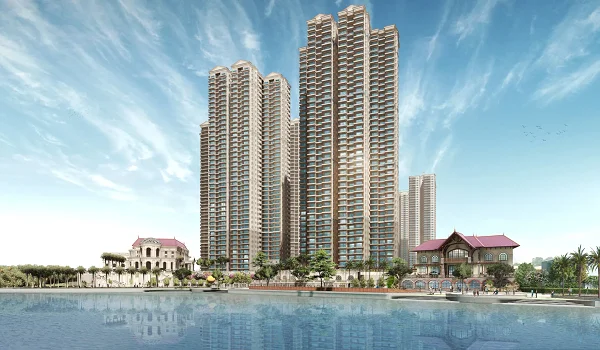
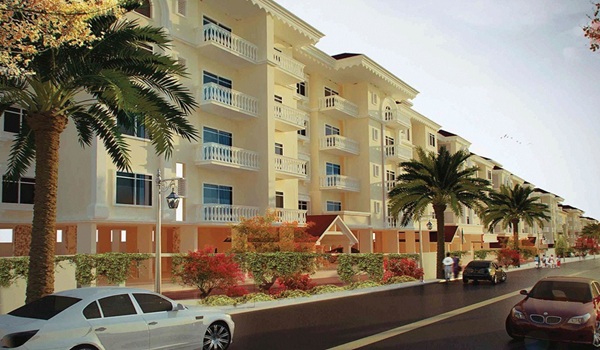
Prestige Park Street in Velachery is a prime example of an institutional gated community, built across 3.48 acres on 140, Velachery 100 Feet Road with only 72 units per acre. Built by the reputed Prestige Group, the project has 252 luxury flats spread across 4 towers rising 18 floors high above two basement levels. The project has set its pre-launch for October 5, 2026, with planned handovers starting from October 31, 2030, while its TNRERA registration is currently in progress.
Prestige Park Street, Velachery: Key Project Facts
| Project Aspect | Details |
|---|---|
| Land and Density | 3.48 Acres | 4 Towers | 252 Total Homes |
| Building Height | 2 Basements + Ground Floor + 18 Upper Floors |
| Starting Prices | From ₹4 Crores upwards for 3 BHK layouts |
| Apartment Sizes | 2,280 sq ft to 4,288 sq ft (3 and 4 BHK units) |
| Important Dates | Pre-Launch: Oct 5, 2026 | Possession: Oct 2030 |
- Prime Location: The project sits right on 100 Feet Road, just 800 meters from Velachery MRTS train station, 3.2 km from the Taramani tech hub, 4.4 km from Guindy Metro, and 7.3 km from Chennai Airport.
- Spacious Living Formats: The homes are built large for comfortable family living, offering 3 BHK units (2,280 to 2,435 sq ft) from ₹4 Crores, 4 BHK units (3,024 to 3,320 sq ft), and large 4.5 BHK homes up to 4,288 sq ft.
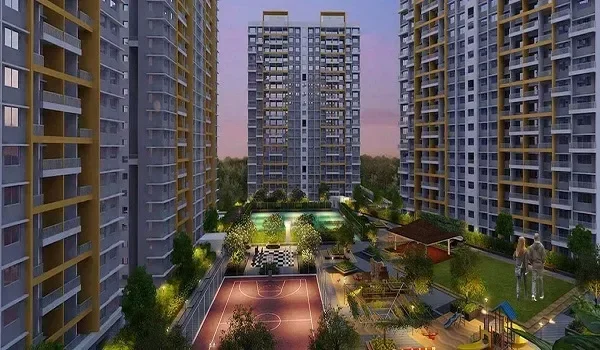
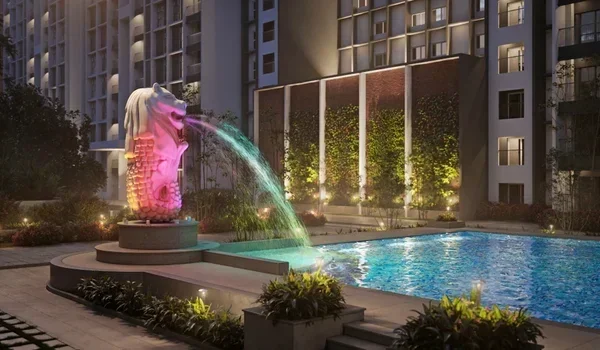
- Community Features: Residents get a central podium clubhouse, separate pools for adults and kids, green gardens, walking trails, and 24-hour security guards with full CCTV camera coverage.
- Safe for NRIs: Established builders follow clean milestone-based payment schedules, run dedicated help desks for overseas buyers, and make reselling simple in the open market.
Taxes and Money Transfers: TDS Rules and Capital Gains
When you buy a home in Chennai, Indian tax laws require you to deduct Tax Deducted at Source (TDS) from the seller's payment and submit it to the government. If you forget to deduct this tax, you could face tax notices and fines, so knowing the basic rules is essential.
- TDS on Local Sellers: If you buy a house priced over ₹50 Lakhs from a resident Indian, you must deduct 1% TDS and pay it online.
- TDS on NRI Sellers: If you buy a house from another NRI, the starting TDS is 20% plus extra surcharges, unless the seller brings a lower-tax certificate from the tax office.
- Sale Profit Taxes: If you sell your house within 24 months, your gains count as short-term income and follow your standard tax slab rate.
- Long-Term Tax Rate: If you sell after holding the house for more than 24 months, your profit is taxed at a flat rate of 12.5%.
- Tax Saving Rules: You can avoid paying this capital gains tax by buying another home in India within two years or by buying 54EC capital gain bonds within six months.
- Moving Sale Cash Out: To send your sale money back overseas, file the online Form 15CA and get a signed Form 15CB from a practicing Indian Chartered Accountant.
FAQs
Yes, OCI cardholders share the same property purchase rights as Indian citizens and can buy any home or office without seeking RBI permission.
Yes, an Indian PAN card is mandatory to sign your sale deed, make bank payments, deduct TDS, and pay property tax to the Chennai city corporation.
You can give a Special Power of Attorney to a trusted family member or lawyer in India, get it stamped at the Indian Embassy, and have it registered in Chennai.
Tamil Nadu charges 7% stamp duty and a 2% registration fee on the final market price or the state guideline value of the property.
Yes, leading Indian banks provide home loans up to 75% to 80% of the flat cost, as long as you pay your monthly EMI from an NRE or NRO bank account.